
Understanding Today
Today gathers the civil date and the life of the Church for that day.
The date and liturgical season
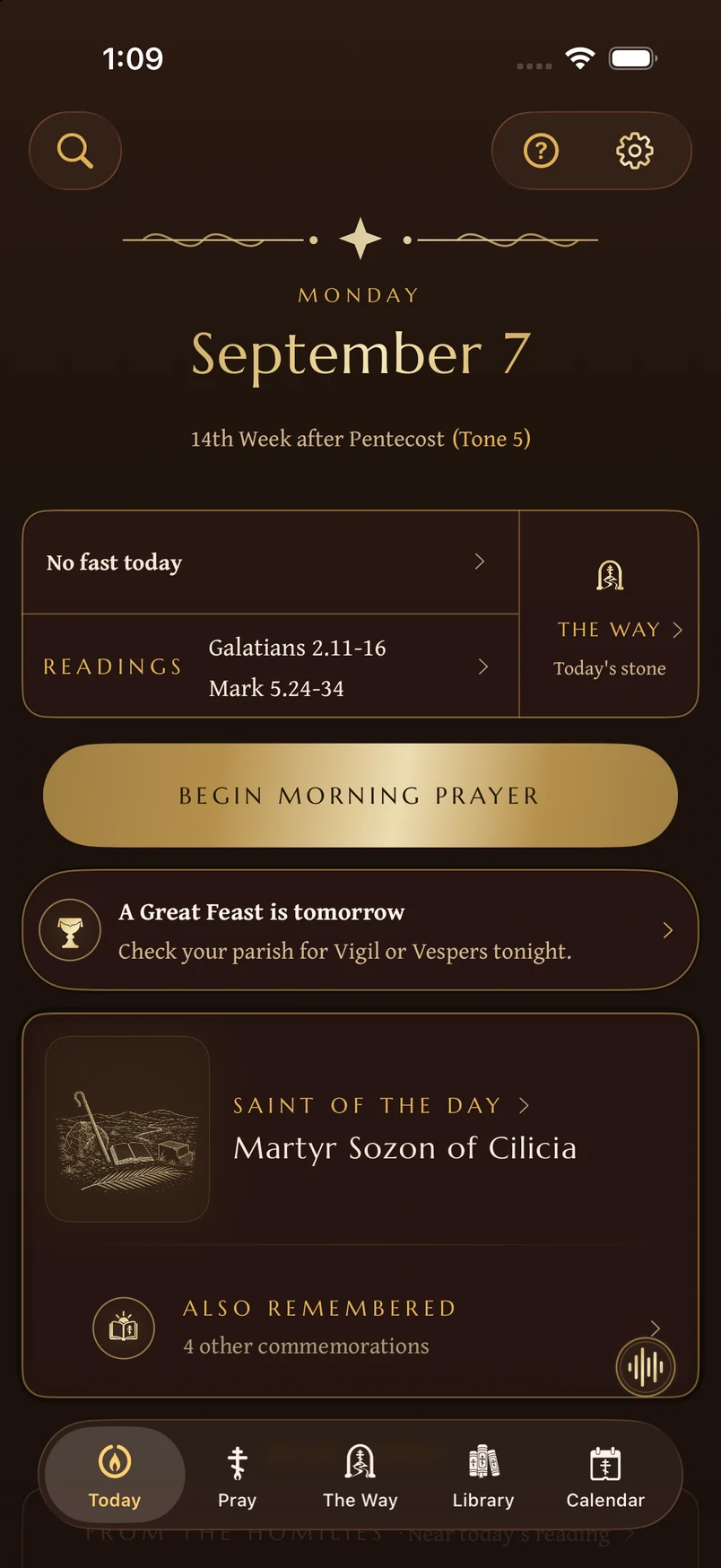
The heading names the weekday and date. Seasonal information can identify Great Lent, Holy Week, Pascha, one of the fasting seasons, or the ordinary weeks after Pentecost.
Feast and saint
A feast commemorates Christ, the Mother of God, a saint, or a saving event in the life of the Church. The saint card introduces the person or event remembered that day. Open it for the complete source-backed life when one is available.
Tone
The Orthodox Church uses a recurring cycle of eight tones for hymnography. Open the tone line to learn how that tone is used and to see related hymns.
Fasting guidance
The fasting card describes the calendar's general observance. Local practice, health needs, age, pregnancy, travel, and pastoral guidance matter. Use Orthros as a guide, then ask your priest how the fast should be kept in your own life.
Readings and teachings
Daily readings open the Biblical text. Related patristic material appears only when Orthros has a reviewed, licensed source for it.
Begin prayer
The large gold button opens the morning or evening prayer rule. This remains the shortest path from opening Orthros to praying.
During your first week, a short guide titled Your first week sits below the prayer button. It opens the parts of this guide worth knowing first: prayer, The Way, the calendar, the Library and Search, and Your Lamp. It leaves after seven days, or sooner when you choose Set this aside.
Quick reference
- On iPhone, Search is at the upper left. Help and the Your Lamp gear are at the upper right.
- Below the date and season, the fasting and readings summary sits beside The Way. The gold prayer button follows. Feast notices, the saint card, and further readings continue below.
- The saint card's heading adapts to what the calendar actually holds for the day: “Saint of the Day,” “Saints of the Day” when there's more than one, or the weekday's own dedication when no saint is named.
- “✦ What the Fathers say,” beside the Verse of the Day, opens patristic commentary on that verse when Orthros has a reviewed source for it.
Didn’t find what you needed? Contact support.